

Monterrey Industrial Market Vacancy Shifts as Nearshoring Enters Its Next Phase


Executive Signals
The Mexican industrial real estate market continues to transition from the explosive expansion phase of the nearshoring cycle into a more selective and infrastructure-dependent growth stage. Monterrey remains the country's dominant industrial hub, but recent market data reveals a more balanced environment characterized by rising vacancy, stabilizing rents, increased speculative inventory, and more demanding occupier requirements. The narrative is no longer simply about demand; it is increasingly about execution, infrastructure readiness, energy availability, logistics efficiency, and tenant quality.
Several contradictory signals deserve attention. Investment announcements remain strong across manufacturing, logistics, and advanced industry, while industrial construction pipelines are slowing and vacancy levels are rising. At the same time, cross-border trade volumes continue growing, but tariff uncertainty and evolving USMCA discussions introduce new variables for occupiers evaluating Mexico expansion strategies. The result is a market where opportunities remain significant, but competitive advantage increasingly depends on location quality, utility availability, logistics connectivity, and operational resilience rather than simply being present in the nearshoring story.

1. Monterrey Industrial Market Vacancy Reaches 6.9% with New Nearshoring Cycle
Monterrey's industrial market continues to lead Mexico, but the market is now moving into a more balanced phase after several years of extraordinary nearshoring-driven demand. Industrial inventory has reached approximately 17.9 million square meters while vacancy has increased to 6.9%, reflecting significant new speculative deliveries and a normalization of tenant demand.
For industrial developers, occupiers, and investors, this represents an important strategic shift. The Monterrey industrial market, industrial vacancy, industrial absorption Mexico, Class A industrial space, and nearshoring warehouse demand story is becoming increasingly selective. Quality assets with strong infrastructure, power availability, and logistics connectivity should continue outperforming while secondary inventory faces greater competitive pressure.

2. Industrial Construction Activity Slows Across Nuevo León
Developers are responding to changing market conditions by moderating new industrial construction activity. Demand remains positive, but occupier decision cycles are lengthening and speculative development is becoming more disciplined.
The evolution of the industrial pipeline Monterrey, spec industrial buildings, build-to-suit Mexico, industrial leasing Mexico, and occupancy rates reflects a healthier and more sustainable market environment. Future success will depend less on delivering space quickly and more on delivering the right product in the right location.
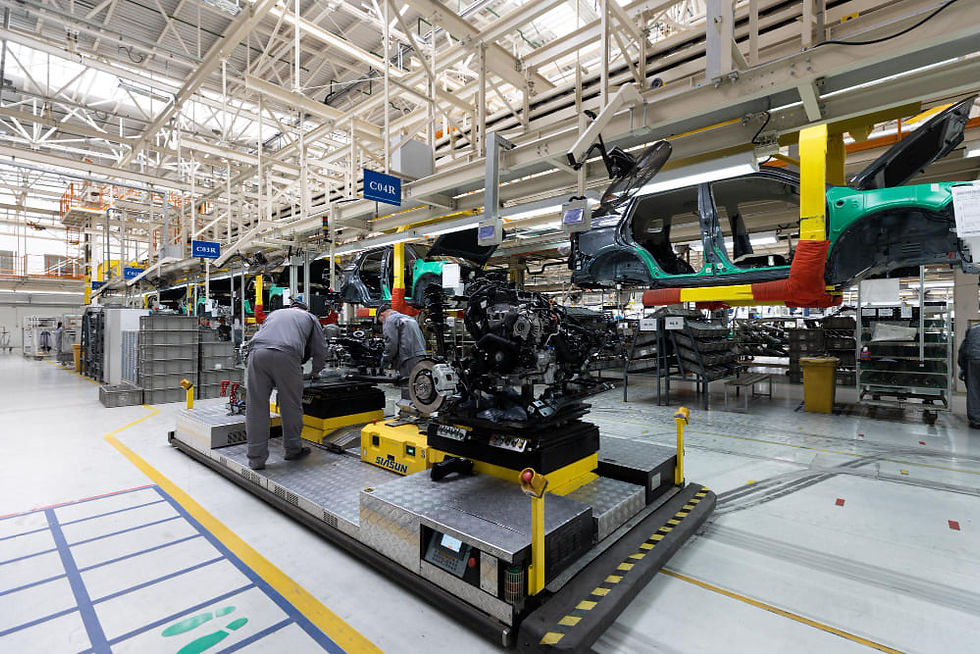
3. Foreign Manufacturers Continue Prioritizing Mexico Despite Global Volatility
International manufacturers continue evaluating Mexico as a preferred production platform due to USMCA advantages, proximity to U.S. markets, labor competitiveness, and logistics efficiencies.
The continued relevance of China+1 strategy, nearshoring Mexico, North American manufacturing, OEM suppliers Mexico, and supply chain diversification suggests the structural drivers supporting industrial demand remain intact despite short-term market fluctuations.

4. Nuevo León Strengthens Position as Mexico’s Primary Industrial Ecosystem
Nuevo León continues promoting itself as the country's leading industrial destination through an ecosystem that includes industrial parks, logistics infrastructure, technical talent, and manufacturing clusters.
The combination of industrial parks Monterrey, advanced manufacturing Mexico, industrial ecosystem, engineering talent, and foreign direct investment continues attracting global occupiers. Maintaining infrastructure readiness will be critical to sustaining this competitive position.

5. Rules of Origin Could Become a Major Strategic Theme Ahead
Recent U.S.-Mexico trade discussions indicate that rules-of-origin compliance may receive increased attention in future policy negotiations.
For companies involved in automotive supply chains, USMCA manufacturing, industrial leasing Mexico, OEM supplier networks, and cross-border production, supply chain traceability and sourcing strategies may become increasingly important investment considerations.
Looking Ahead
Over the coming months, we will closely monitor several emerging signals: the evolution of U.S.-Mexico trade discussions, industrial power and water infrastructure readiness, data center expansion, manufacturing relocation announcements, border logistics capacity, and vacancy stabilization across Northern Mexico. The strongest opportunities may emerge where infrastructure investment successfully keeps pace with industrial growth. The biggest risks remain tied to utilities, trade policy uncertainty, and the gap between investment announcements and operational readiness. As nearshoring enters a more mature stage, market leadership will increasingly belong to regions and projects capable of converting demand into efficient, scalable industrial ecosystems.
Keep up with the latest and most relevant news stories in our sector. Follow ARENDE and read our montly news digest, ARENDE en 5.


Comments